

 Bahasa Indonesia
 العربية
 中文
 한국어
 日本語
BOP, BOPF, PF, Dust: what black tea grade names actually mean
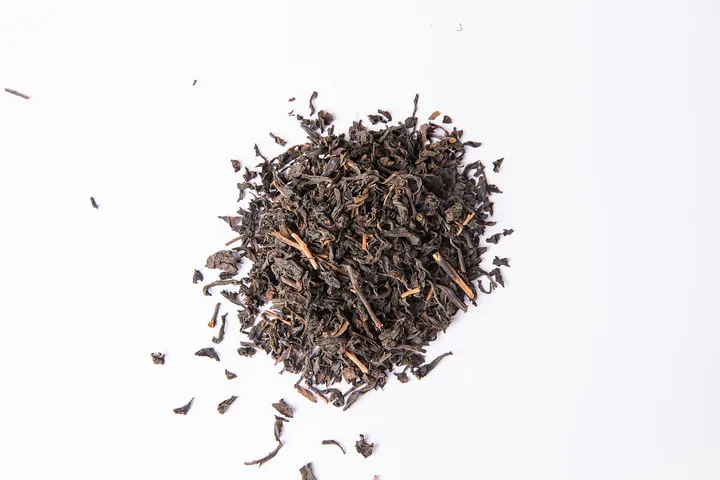
When browsing black tea product lists, you will run into abbreviations such as BOP, BOPF, PF, or Dust. These are not secret producer codes: they are orthodox black tea grades that describe leaf particle size after processing — not a ranking of taste quality.
Orthodox black tea starts with withering; the leaves are then rolled or bruised so their juices are released, fully oxidized, and dried. During oxidation, most catechins turn into theaflavins and thearubigins — two reddish compounds that help give black tea its liquor its color. After drying, the leaves are sorted by particle size, and those sortings give the grades their names.
What BOP, BOPF, PF, and Dust mean
In orthodox black tea, the grade comes from particle-size sorting:
- BOP (Broken Orange Pekoe): leaves broken into smaller pieces, but still relatively large.
- BOPF (Broken Orange Pekoe Fannings): finer than BOP, in the fannings category.
- PF (Pekoe Fannings): fine fannings particles.
- Dust: the finest particles of all.
The smaller the particle, the faster and stronger the brew. That is why fannings and dust are widely used in tea bags: the liquor comes out quickly and strong in a short steep. BOP, with larger particles, tends to give a more balanced cup for loose-leaf brewing.
Grade is not a quality ranking
The key point for buyers: BOP → BOPF → PF → Dust is a sequence of particle sizes, not a ranking from best to worst. Good-quality dust still produces a strong, clear cup that suits milk-tea blends and tea bags, while equally good BOP works well for straight brewing. What determines final quality is the leaf material, the processing, and the standard applied — for example, moisture content.
Indonesian black tea generally follows the national standard SNI 1902:2016, which sets maximum moisture at 7%. In export trade, black tea is classified under HS 0902.40.
What it means for buyers
Choose a grade by end use, not by assumptions of “higher or lower”:
- For tea bags and quick, strong brews: BOPF, PF, or Dust are efficient.
- For balanced loose-leaf brewing: BOP is the common choice.
- For milk tea and blends: fannings and dust are often the most economical because extraction is fast.
Rasa Nativa Java supplies orthodox black tea from West Java in BOP, BOPF, PF, and Dust grades, with moisture max. 7% (SNI 1902:2016), packed in 25 or 40 kg paper sacks. Orders start from 1 kg retail for tasting, wholesale per sack, up to full containers for importers. To find out which grade fits your product, see our black tea page or read the guide to importing coffee and tea from Indonesia.
Sources
- Tea leaf grading · Wikipedia
- Tea processing · Wikipedia
- Epigallocatechin gallate · Wikipedia
- Theaflavin · Wikipedia
- Teh Hitam Rasa Nativa Java · PT. Rasa Nativa Java
Baca artikel ini dalam Bahasa Indonesia
Looking for West Java coffee or tea?
We supply green coffee beans and tea from 1 kg to full export containers. Ask for a sample or a price quote.