

 Bahasa Indonesia
 العربية
 中文
 한국어
 日本語
EUDR applies from 30 December 2026: what coffee buyers must do
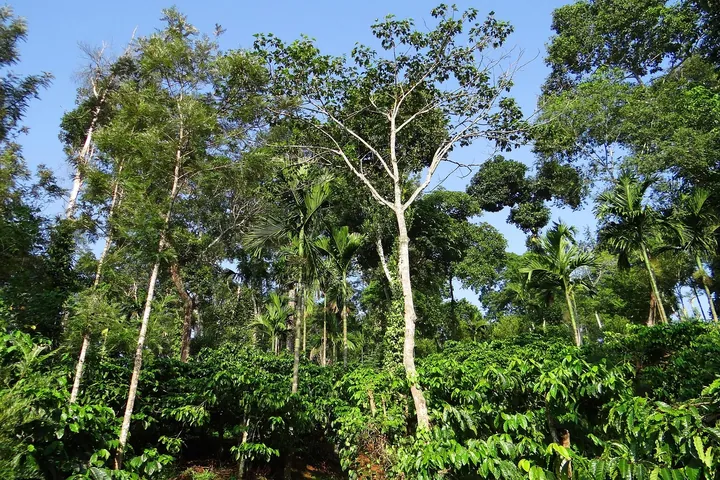
From 30 December 2026, the EU Deforestation Regulation (EUDR, Regulation (EU) 2023/1115) applies to large and medium-sized operators. Coffee has been on the list of covered commodities since the regulation was adopted, so every green coffee shipment entering the EU market now needs a due diligence statement behind it. For buyers in Europe this is no longer a planning exercise; the deadline is weeks away.
The regulation was postponed twice (Regulation (EU) 2024/3234 and 2025/2650) and simplified in December 2025. What changed is not the substance but who files what.
What is actually required on 30 December 2026
The European Commission frames it as three conditions for products placed on, sold within, or exported from the EU: the goods must be deforestation-free, produced in line with the laws of the country of production, and backed by adequate due diligence. For coffee, that due diligence rests on the geolocation of the plots where the coffee was grown, evidence that the land was not deforested after 31 December 2020, and a check on legality of production.
Dates differ by company size. Large and medium operators start on 30 December 2026. Micro and small operators have until 30 June 2027. Downstream operators and traders fall under the 30 December 2026 date, and those that are not SMEs must register in the Information System before then.
Who does what in the chain
The December 2025 simplification introduced a "downstream operator" category and cut obligations for traders. In short:
- Operators, usually the importer, submit a due diligence statement (DDS) through the Information System before releasing goods onto the EU market. Micro and small operators file a simplified one-off declaration.
- Roasteries that buy green coffee and sell it roasted generally act as downstream operators. They no longer file their own statements, but must keep supplier and customer records for five years, including the reference number of the statement that came with the coffee.
- Non-SME upstream operators must publish an annual report on their due diligence system; the first covers actions taken in 2027 and is published in 2028.
One detail is easy to miss: soluble coffee only enters scope on 30 December 2027. Green coffee and roasted coffee are already in.
The hard work sits upstream, in Indonesia
The legal obligation sits with EU businesses, but the data has to come from the farm. That is where the pressure lands.
A 2026 policy brief from ERIA's Trade Policy Advisory Group notes that 25.4% of Indonesia's total trade value comes from commodities covered by the EUDR, with around 2.6 million Indonesian smallholders affected by it. Farmer associations estimate the cost of bringing a single smallholder into compliance at about IDR 44 million (USD 2,600) per farmer. ERIA also reports that fewer than 1% of independent smallholders currently meet the EUDR's traceability and legality requirements.
Two technical points draw the most complaint: six-decimal coordinate precision, roughly 10 to 11 centimetres of accuracy, and polygon mapping for plots above four hectares. ERIA also flags the definition gap on forests, where Indonesian agroforestry risks being read as deforestation. Minimum fines are 4% of annual EU turnover.
Direct export routes are also opening. On 7 September 2026, 19.2 tonnes of Robusta from Kepahiang, Bengkulu, went straight to Italy, worth around IDR 1.2 billion (USD 71,000). For the first time the shipment's origin was officially recorded as Bengkulu through a Certificate of Origin instead of being consolidated by exporters from another province. Clean origin paperwork is the foundation of compliance.
Tea is out of scope, packaging is not
The EUDR covers seven commodities: cattle, cocoa, coffee, oil palm, rubber, soy and wood, plus their listed derivatives in Annex I. Tea has never been among them, and the 2026 amendments to Annex I did not add it. For the tea leaf itself there is, in almost every case, no statement to file.
Packaging is the exception worth checking. Wood and paper products are listed in Annex I, so wooden crates or pallets in a tea shipment still carry their own documentary trail.
What it means for buyers
For buyers, the EUDR changes the questions you ask a supplier. Five things worth requesting up front:
- Plot-level geolocation per lot: coordinates, not just a village name.
- Evidence of land title and business licences in the country of origin.
- Technical specification per lot: grade, moisture, defect value, screen size and HS code.
- Supply chain history: who processed it, where it was dried, when it shipped.
- The DDS reference number from the importer, to keep on file for audit.
A supplier who collects this data at the farm is cheaper to bring into compliance than one who starts at the port. Our guide to importing coffee and tea from Indonesia covers export documents and HS codes, and the SNI grading guide explains how green coffee is graded.
Rasa Nativa Java supplies Arabica green bean, Arabica commercial grade, Robusta green bean, green tea and black tea, with specifications confirmed per lot before contract. As a reference, our quoted reference price for Arabica green bean on 14 November 2026 is USD 18.80/kg; that is a market reference, not an offer.
For buyers assembling an EUDR file, our team can send the origin data and specifications for the lot you are considering. Start with a sample request or write to [email protected].
Sources
- Implementing the EU Deforestation Regulation (EUDR) · European Commission, Green Forum
- EU Deforestation Regulation: The final countdown to application on 30 December 2026 · Addleshaw Goddard LLP
- Deforestation "on hold": inward processing as the EUDR's free zone · Bird & Bird
- Menavigasi European Union Deforestation Regulation (EUDR): Tantangan dan Peluang bagi Perdagangan Indonesia · ERIA, Trade Policy Advisory Group (TradePAG) 2026
- EUDR for tea importers: why tea isn't treated like coffee · EUDR Check
- EUDR for Coffee Roasters: What Changes on 30 December · Origin Bridge
- Bengkulu Robusta Coffee Enters Italy in Historic Direct Export · RRI.co.id
Baca artikel ini dalam Bahasa Indonesia
Looking for West Java coffee or tea?
We supply green coffee beans and tea from 1 kg to full export containers. Ask for a sample or a price quote.