

 Bahasa Indonesia
 العربية
 中文
 한국어
 日本語
Five Documents That Accompany Every Indonesian Coffee Export
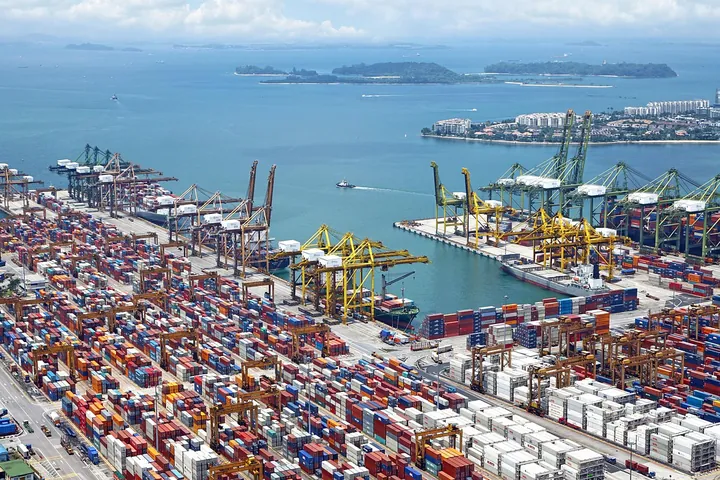
When a container of Indonesian green coffee sails out, it carries more than beans: it carries a document set. According to a green coffee shipping guide by Dr.Koffie Indonesia, five standard documents accompany every shipment, and the buyer's bank and customs broker read them side by side. Names, weights, and bag markings must therefore match across all of them.
Why the paperwork matters as much as the coffee
Documents are the buyer's proof of legality and quality. Under a letter of credit (L/C), the bank checks every document against the L/C terms, and the smallest discrepancy can hold up payment. Under other payment terms, the same documents are what release the goods at the destination port. Even excellent coffee can be stuck if the paperwork does not line up.
The five standard shipping documents
Per Dr.Koffie Indonesia, the standard set for every green coffee shipment from Indonesia is:
- Commercial invoice (issued by the exporter) — seller and buyer per the contract, product and grade, HS code 0901.11 for green coffee, net weight, price, Incoterms basis, and total value.
- Packing list (exporter) — per container: container and seal numbers, lot number, number of bags, net weight, tare, and gross weight.
- Bill of lading / B/L (shipping line, usually via the forwarder) — at once a receipt, a contract of carriage, and a document of title: whoever holds the original B/L to order can claim the coffee at the discharge port. Buyers typically require a clean, on-board B/L.
- Phytosanitary certificate (Indonesian National Plant Protection Organization / Barantin, after inspection) — the description and quantity must match the other documents, plus any additional declaration the destination country asks for.
- ICO Form SKA (issued by the authorized certificate-of-origin agency via the e-SKA system) — the coffee-specific certificate of origin; bag count and markings must match the invoice, and the B/L number stated on it must match the bill of lading itself.
Further documents are added when the contract or destination requires them. Under cash against documents, the buyer's bank releases the original B/L only after payment, so document accuracy directly determines how fast the buyer gets paid and receives the coffee.
The phytosanitary certificate: required on the Indonesian side
Barantin issues the certificate after physical inspection and, where needed, laboratory testing. A 2026 export-clearance guide from Indonesia-coffee.com explains that green coffee (HS 0901.11/0901.12) needs this certificate to clear export, while roasted coffee (HS 0901.21/0901.22) generally does not on the Indonesian side — though some destinations still request it, so importers should confirm locally.
Interestingly, not every destination demands a phytosanitary certificate for green coffee: the European Union does not require it, and Japan exempts dried green coffee (Plant Protection Station, MAFF). Indonesian law still requires it at export, however, so the document travels with the shipment regardless of destination.
Two things are often confused: a fumigation certificate does not replace the phytosanitary certificate (some destinations require both), and the certificate number must be referenced in the "complementary documents" section of the export declaration (PEB) so it validates automatically in Indonesia's INSW single window. The same guide notes that data mismatches — a rounded net weight or a bag count differing from the certificate — can hold the export clearance notice for hours.
ICO Form SKA: the coffee-specific certificate of origin
Coffee has a certificate-of-origin form of its own. Under Indonesian Trade Regulation No. 19 of 2019, every coffee export to any country — ICO member or not — must be accompanied by an ICO Form SKA stating that the coffee originates in, is produced, and/or is processed in Indonesia (GAEKI). The form is A4-sized, and its quality box lets the exporter note the coffee's characteristics, HS code, and FOB value.
The sequence matters: the export declaration (PEB) is filed with customs before the container enters the bonded area, and the ICO Form SKA cannot be issued without it. Buyers who ask for document copies early therefore help speed up pre-clearance at their own port.
What this means for buyers
Three practical steps at the quotation stage:
- Ask for the document list with the offer. Make sure the phytosanitary certificate and ICO Form SKA are included for green coffee.
- Check data consistency. Consignee name, weights, bag counts, and bag markings must be identical across invoice, packing list, B/L, and certificates. A small document mismatch is as disruptive as a quality defect.
- Request copies early. Copies of the non-negotiable B/L, phytosanitary certificate, and ICO Form SKA sent before the vessel sails speed up customs checks at your end.
If you are evaluating supply, see our green bean specifications or read the guide to importing Indonesian coffee and tea for the full flow from quotation to arrival.
Sources
- Dokumen ekspor kopi hijau: apa saja yang menyertai pengapalan · Dr.Koffie Indonesia
- Panduan Penyelesaian Ekspor Kopi Indonesia: PEB & NPE 2026 · Indonesia-coffee.com
- Ekspor Kopi Spesialti Jalur Laut: Dokumen ICO, Karantina, dan Kemasan · GMA World
- Permendag No. 19 Tahun 2019 (Form ICO untuk ekspor kopi) · JDIH BPK
- Ketentuan Ekspor Kopi (SKA Form ICO) · GAEKI
Baca artikel ini dalam Bahasa Indonesia
Looking for West Java coffee or tea?
We supply green coffee beans and tea from 1 kg to full export containers. Ask for a sample or a price quote.