

 Bahasa Indonesia
 العربية
 中文
 한국어
 日本語
Moisture 12.5% and defect value: the two numbers behind coffee quality
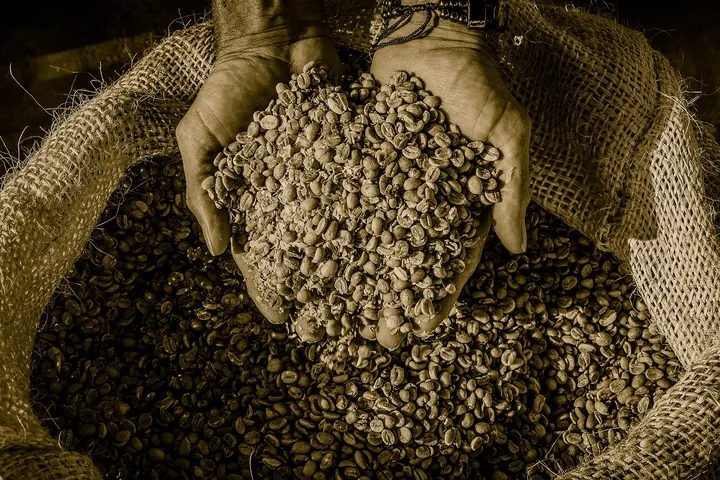
The Sukabumi district government has set aside 1,150 hectares for coffee expansion and replanting in its 2026 budget year, working with 136 farmer groups. The figure breaks down into 250 hectares of new Robusta, 800 hectares of new Arabica and 100 hectares of Arabica replanting. What matters for buyers is not the acreage but the reason behind it: productivity and quality.
The head of Sukabumi's Agriculture Office, Aep Majmudin, made the announcement at a briefing on the district's 2026 coffee programme in Palabuhanratu on Monday, 9 November, as reported by Sukabuminow.com. The district's coffee area has strong potential, but 98.62 percent of it is smallholder land — and that is exactly where the problems sit: low yields, produce that does not yet meet standards, and weak farmer institutions.
"This expansion and replanting is an effort to raise coffee production and productivity. We also need to improve the quality of what the plantations produce so that it meets standards and answers market demand," Aep said.
For a green coffee buyer, that last sentence is the whole story. In trade terms, "quality" is not an impression of flavour; it is two numbers that can be measured on every lot: moisture content and defect value.
Why moisture comes first
Export quality standards for green coffee are explicit about water. Under the International Coffee Organization quality standard (ICO Resolution 420), neither Arabica nor Robusta may fall below 8 percent or exceed 12.5 percent moisture, measured by the ISO 6673 method. The same provision is recommended for sales contracts: the 12.5 percent ceiling must not be exceeded at the point the container is stuffed.
The reason is shelf life and food safety rather than taste. The FAO/Codex Alimentarius Code of Practice (CXC 69-2009) states that bean moisture is reduced to a maximum of 12.5 percent to prevent the formation of ochratoxin A (OTA), and notes that moisture below 12.5 percent (wet basis) with water activity around 0.67–0.70 is sufficient to protect coffee from fungal damage.
The European Coffee Federation makes the same point in its mould-prevention guidance: moisture is the main risk factor for OTA formation after the first processing stage. If a lot measures above 12.5 percent at stuffing, the recommendation is blunt — do not ship it; dry it down first.
So the 12.5 percent figure on a specification sheet is not decoration. It is the line between coffee that arrives sound and coffee that may turn mouldy during the voyage.
Defect value: how the grade is set
The second number is the defect value. In Indonesia, green coffee is graded under SNI 01-2907-2008. A grader takes a 300 g sample, separates every defective bean and foreign object, assigns each the weight set by the standard, and adds them up. The lower the total, the higher the grade.
- Grade 1: max. 11
- Grade 2: 12–25
- Grade 3: 26–44
- Grade 4a: 45–60, Grade 4b: 61–80
- Grade 5: 81–150
- Grade 6: 151–225
The weights are uneven. One black bean counts 1, one partly black bean ½, one broken bean ⅕, one bean with a single insect hole ⅒, and one large stone, stick or clump of earth counts 5. As an example: a sample with 4 black beans, 10 broken beans and 20 beans with one hole scores 4 + 2 + 2 = 8, which still qualifies as Grade 1.
Two conditions apply to every grade: moisture max. 12.5 percent and foreign matter max. 0.5 percent. For Arabica, bean size is checked with screens, and uniform size makes for a more even roast.
What it means for buyers
The news from Sukabumi explains why supply from a single region can vary so much: most of the coffee comes from many small farms, each with its own post-harvest practice. Buyers have to filter that variation with data, not assumptions.
Three things worth asking for before signing:
- Moisture per lot, not per region. Ask for the measured figure, name the method (ISO 6673 if you want export-equivalent numbers), and confirm it was taken before stuffing.
- Defect value per 300 g and the resulting grade. That number says more about consistency than the word "premium" ever will.
- A sample before volume. A 350 g sample against a deposit credited to the first order tells you more than any brochure.
For market context, Indonesia's Ministry of Agriculture reports national coffee production of about 813 thousand tonnes of green coffee equivalent in 2024 (BPS data), with exports of 316.7 thousand tonnes worth more than USD 1.63 billion in the same year. That is a lot of volume available — and precisely why lot-level quality screening remains the buyer's job.
Our full guide to reading Indonesian grades and moisture limits is at Indonesian coffee grades (SNI). For specifications you can compare side by side, see Arabica Green Bean, Arabica Commercial Grade and Robusta Green Bean. Import steps, documents and FOB/CIF terms are summarised in the Indonesia coffee and tea import guide.
Sources
- Sukabumi Punya Potensi Kopi Besar, Dinas Pertanian Soroti Masalah Produktivitas dan Mutu · Sukabuminow.com
- OTA risk management: Guidelines for green coffee buying (ICO Resolution 420, moisture 8–12,5% ISO 6673) · International Coffee Organization
- Code of Practice for the Prevention and Reduction of Ochratoxin A Contamination in Coffee (CXC 69-2009) · FAO / Codex Alimentarius
- Code of Practice: Prevention of Mould Formation (batas kadar air 12,5%) · European Coffee Federation
- Ekspor Tembus US$1,63 Miliar: Kementan Perkuat Hulu hingga Hilir (produksi 813 ribu ton, ekspor 316,7 ribu ton 2024) · Direktorat Jenderal Perkebunan, Kementerian Pertanian
- Grade Kopi Indonesia SNI 01-2907-2008: Nilai Cacat & Kadar Air · Rasa Nativa Java
Baca artikel ini dalam Bahasa Indonesia
Looking for West Java coffee or tea?
We supply green coffee beans and tea from 1 kg to full export containers. Ask for a sample or a price quote.