

 Bahasa Indonesia
 العربية
 中文
 한국어
 日本語
Three dates that decide Indonesian coffee and tea imports into Europe
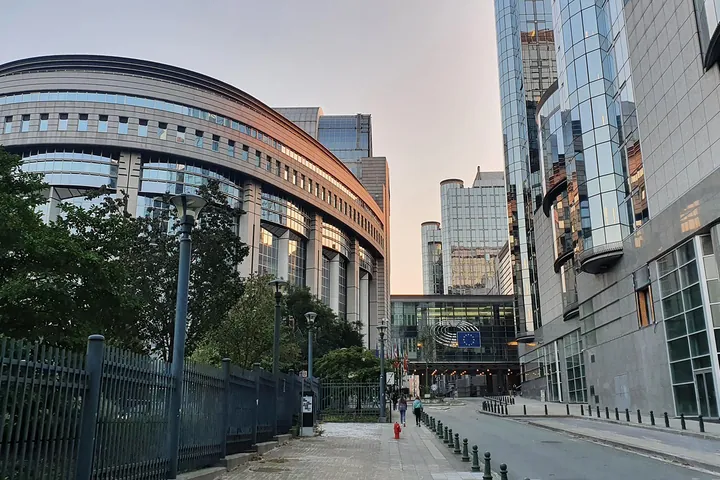
Between mid-November 2026 and early 2027, three deadlines change the cost and conditions of bringing Indonesian coffee and tea into the European Union. They arrive almost together, and only one of them is really about tariffs.
The IEU-CEPA signature: 21 November 2026
Trade Minister Budi Santoso said the Indonesia–European Union Comprehensive Economic Partnership Agreement (IEU-CEPA) is scheduled to be signed on 21 November 2026 in Brussels. After that, the government is pushing ratification so the agreement can enter into force in January 2027, because Indonesia's GSP tariff facility ends in January 2027.
A week earlier, Deputy Trade Minister Dyah Roro Esti referred to 28 November 2026, while Coordinating Minister Airlangga Hartarto mentioned signing on 21 November and submission to the European Parliament on 23 November. Different dates at this stage of a negotiation are normal. For buyers, the exact day matters less than the fact that the window is now counted in weeks.
GSP ends on 1 January 2027, and CEPA does not automatically replace it
GSP is a unilateral tariff facility for lower-income countries. According to Coordinating Minister Airlangga, Indonesia has reached upper-middle-income status and is therefore no longer entitled to it. The existing GSP regulation runs until 31 December 2026 and is replaced by a new regulation from 1 January 2027. Without a replacement arrangement, Indonesian exporters face higher duties and reduced price competitiveness.
The government states that IEU-CEPA will cut 90.4 percent of tariff lines to zero immediately, with 8.37 percent phased down, and names coffee among the commodities expected to benefit. ANTARA reports liberalisation of roughly 98 percent of tariff lines, covering 99.5 percent of the value of bilateral imports. The rate for any single tariff line, however, has to be read in the agreement text, not in a news summary. The practical instruction for buyers: ask your supplier or importer to confirm the tariff line for your goods in writing, and do not assume everything becomes zero.
What the tariff actually is today
EU TARIC data as of 13 November 2026 shows a picture that is widely misunderstood:
- Green coffee, not roasted, not decaffeinated (code 0901 11 00): third-country duty 0%.
- Roasted coffee, not decaffeinated (code 0901 21 00): 7.5%.
- Green tea in immediate packings of 3 kg or less (code 0902 10 00): 3.2%.
- Bulk green tea (0902 20 00), and black tea in retail packs or bulk (0902 30 00 and 0902 40 00): 0%.
The implication matters. For green beans, CEPA cannot lower the duty because the duty is already zero — what remains is import VAT in the destination country, which varies by member state and is usually recoverable for VAT-registered importers. The room for improvement sits in processed products: roasted coffee at 7.5 percent and retail-packed green tea at 3.2 percent. For tea, that 3.2 percent gap is purely a packaging decision: bulk and small retail packs are treated differently.
EUDR applies from 30 December 2026 — sooner than CEPA
The EU Deforestation Regulation applies from 30 December 2026 for large and medium operators and traders, and from 30 June 2027 for micro and small enterprises that already had that status on 31 December 2024. The deforestation cut-off date remains 31 December 2020: in-scope commodities must come from land not deforested or degraded after that date.
Coffee is one of the seven core commodities. From the application date, goods may only be placed on or exported from the EU market if they are deforestation-free, produced in accordance with the legislation of the country of production, and covered by a Due Diligence Statement (DDS). Customs declarations without a valid DDS reference number will not be accepted. Soluble coffee is only added to scope from 30 December 2027.
What it means for buyers
First, tariffs are no longer the main reason to postpone green coffee purchases. What will decide whether shipments move smoothly at the end of this year is EUDR documentation: plot geolocation, due diligence and a DDS number. Buyers with contracts maturing in December should ask suppliers about DDS readiness now, not after the container has sailed.
Second, for tea, reconsider the packaging. Retail-packed green tea carries 3.2 percent; bulk does not. If you repack in Europe anyway, shipping the product in bulk avoids a duty you do not need to pay.
Third, supply readiness is uneven. About 98.6 percent of Indonesia's coffee area is farmed by smallholders, and most of that land is not yet registered, according to Statistics Indonesia data cited by The Jakarta Post. Suppliers who started mapping plots early will move through the new requirements more smoothly after 30 December 2026.
Fourth, request quotations with explicit Incoterms and a written tariff-line confirmation. Duty, import VAT and due diligence costs are three separate items and should never be blended into one number.
Rasa Nativa Java prepares export documents and product specifications to buyer requirements. Grades, moisture content and how to request a quotation are set out in the guide to importing Indonesian coffee and tea, while sample terms are described in our sample policy. Buyers looking for West Java arabica green beans can find specifications on the arabica green bean page.
Sources
- Mendag Mau Kebut IEU-CEPA Berlaku Januari 2027, Ini Alasannya (16 November 2026) · CNBC Indonesia
- Wamendag: IEU-CEPA Diteken 28 November 2026 (9 November 2026) · CNBC Indonesia
- Ratifikasi IEU CEPA Membuka Peluang Bisnis dan Investasi Lebih Besar bagi Indonesia dan Uni Eropa (siaran pers, 21 Agustus 2026) · Kementerian Koordinator Bidang Perekonomian
- Indonesia races to sign EU trade deal ahead of GSP expiry (29 Oktober 2026) · ANTARA News
- Regulation on Deforestation-free Products (EUDR) — tanggal berlaku untuk operator besar/menengah dan UMKM · European Commission
- EU Deforestation Regulation (EUDR) applicable from 30 December 2026 (11 November 2026) · Maersk
- TARIC 0901 11 00 (kopi tidak disangrai), 0901 21 00 (kopi disangrai), 0902 10 00 / 0902 20 00 / 0902 30 00 (teh) — bea masuk pihak ketiga · The Trade Hub (data TARIC, tarif berlaku 13 November 2026)
- Indonesia-EU trade: Mapping smallholders is the next step (3 November 2026) · The Jakarta Post
Baca artikel ini dalam Bahasa Indonesia
Looking for West Java coffee or tea?
We supply green coffee beans and tea from 1 kg to full export containers. Ask for a sample or a price quote.